

- ✓How many years is an LLM in India?
- ✓Is a 1-year LLM valid in India?
- ✓What is the eligibility for LLM?
LLM Course Duration, Fees and Scope in India 2026, The Complete Picture
LLM is the next step after LLB, but most law students are not entirely sure what it offers, how long it takes, or whether it is worth doing versus just practicing law. Here is the honest breakdown.
LLM full form and what it means

LLM stands for Legum Magister, Latin for Master of Laws. It is a postgraduate law degree that lets you specialize in a specific legal domain: corporate law, constitutional law, intellectual property, taxation, international law, criminal law, or others.
Where a regular LLB gives you a foundation across all areas of law, an LLM means you go deep in one. That depth makes you more valuable in that specific practice area, which is why senior positions at specialized law firms increasingly list LLM (or equivalent experience) as a requirement.
LLM course duration: 1 year vs 2 years
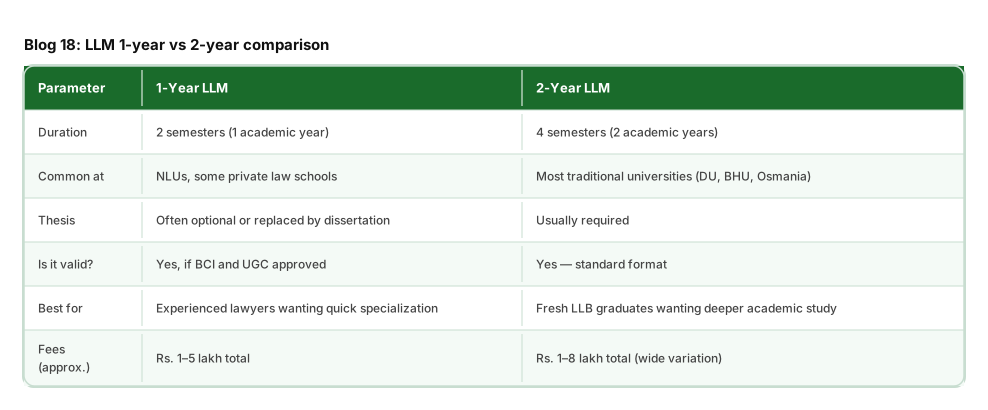
Is a 1-year LLM valid in India? Yes, provided it is from an institution recognized by both the Bar Council of India (BCI) and UGC. The format (1 year or 2 year) does not determine validity. The institutional recognition does. Always verify on the BCI website before enrolling.
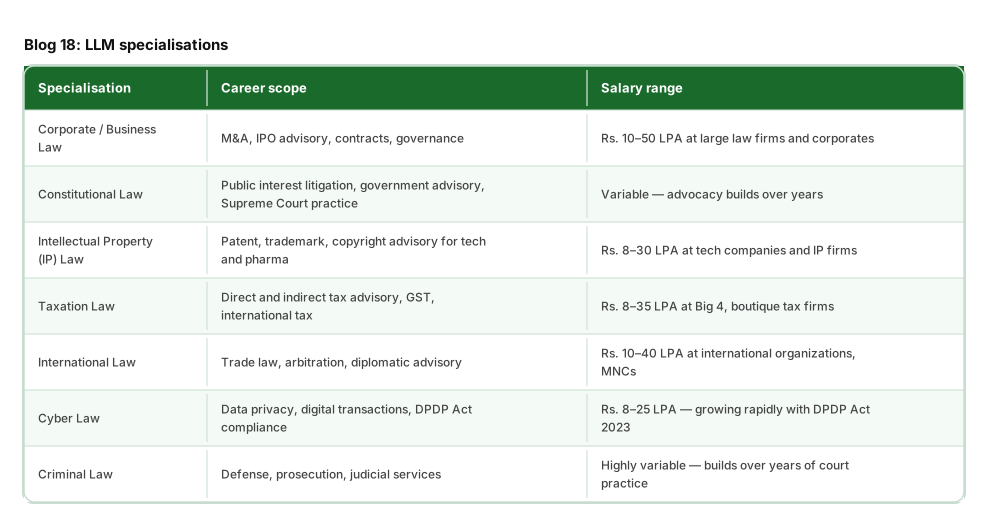
LLM specialisations and career paths
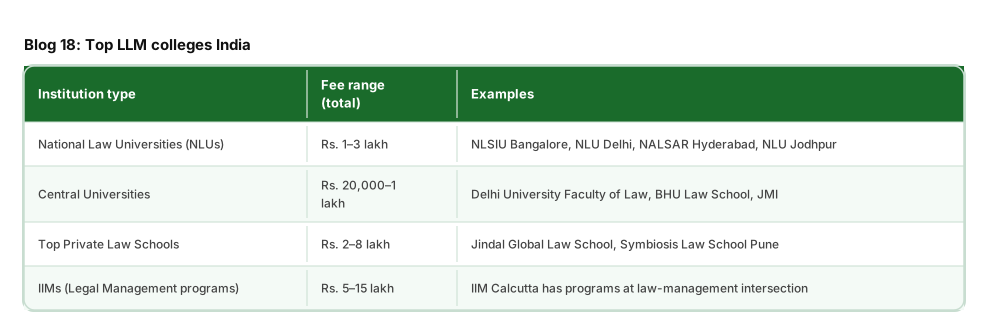
Top colleges for LLM in India
Is LLM worth it? The honest answer
It depends on what you want from it. LLM makes sense if: you want to specialize in a specific high-demand area (corporate law, IP, taxation, international law), you want a career in academia (most law faculty positions require LLM + NET), or you want to practice internationally.
LLM is less useful if: you plan to be a general practitioner, you are doing it because you are not sure what else to do after LLB, or you cannot get into a recognized institution and are considering a low-ranked program.
Explore UGC Approved Online Programs
If you are looking to upgrade your qualifications alongside your career, explore accredited online degrees that carry full government recognition.
Browse Online Degrees →The credential matters less than the institution in law. An LLM from NLSIU or Jindal Global carries significant weight. An LLM from an unknown private college may not add much to your profile beyond the qualification on paper.
One more thing: an LLM from abroad (UK, USA, Australia) is a separate track. LL.M. programs at Oxford, Columbia, and NYU are one year, internationally recognized, and can open practice opportunities in those jurisdictions. They cost significantly more but serve a different career objective than an Indian LLM.
Career scope after LLM in India
- Senior advocate / corporate counsel, Rs. 10 to 60 LPA depending on firm and specialization
- Law professor / faculty, requires NTA-NET qualification; Rs. 5 to 20 LPA at law schools
- Judicial services (Civil Judge), through state judicial services exams; Rs. 8 to 20 LPA with structured government benefits
- Legal head at MNC, in-house counsel roles; Rs. 15 to 40 LPA at mid to large companies
- International arbitration, Rs. 20 to 60 LPA at established international arbitral institutions
Detailed LLM Fee Structure India 2026
| Institution tier | Examples | Total fee (1-year) | Total fee (2-year) |
|---|---|---|---|
| Premium NLU | NLSIU Bangalore, NALSAR Hyderabad, NUJS Kolkata, GNLU Gandhinagar | Rs 1.5 to 3 lakh | Rs 2.5 to 5 lakh |
| Tier-2 NLU and law schools | Jindal Global Law, IIT Kharagpur Law, Symbiosis Law | Rs 4 to 8 lakh | Rs 5 to 10 lakh |
| Premium private universities | Amity Law, Christ University Law, Lovely Professional | Rs 2 to 4 lakh | Rs 3 to 5 lakh |
| Government and state universities | Delhi University, Mumbai University, Anna University | Not commonly offered | Rs 30K to 1.5 lakh |
| Online LLM | Limited UGC-approved options | Rs 1 to 4 lakh range | Rs 1.5 to 5 lakh |
LLM Specialisation Salary Map 2026
| LLM Specialisation | Year-1 CTC | Year-5 CTC | Top Employers |
|---|---|---|---|
| Corporate Law | Rs 12 to 22 LPA (CAM, AZB) | Rs 25 to 50 LPA (Senior Associate) | CAM, AZB, Khaitan, Trilegal, Shardul Amarchand |
| Intellectual Property Law | Rs 10 to 18 LPA | Rs 22 to 40 LPA | K&S Partners, Lex Orbis, Anand and Anand |
| Taxation Law | Rs 10 to 16 LPA | Rs 22 to 40 LPA | Deloitte, EY, PwC, KPMG tax practices |
| International Law | Rs 6 to 12 LPA in India, USD 60K-plus abroad | Rs 15 to 30 LPA | WTO, ICSID, international arbitral institutions, MEA |
| Constitutional Law | Rs 6 to 10 LPA fresher | Rs 12 to 25 LPA (Supreme Court practice) | SCBA practice, government legal roles |
| Criminal Law | Rs 5 to 9 LPA fresher | Rs 12 to 22 LPA (senior counsel track) | Independent practice, defense firms |
| Family Law and Mediation | Rs 5 to 8 LPA | Rs 10 to 18 LPA | Family courts, mediation firms |
| Cyber Law and Data Privacy | Rs 8 to 14 LPA | Rs 18 to 32 LPA (high demand post-DPDP Act 2023) | Big 4, tech companies, cybersecurity firms |
Top NLUs for LLM India 2026
- NLSIU Bangalore: Top-ranked law school in India. LLM fee Rs 2.5 to 3 lakh. CLAT PG admission. Median placement Rs 18 to 28 LPA.
- NALSAR Hyderabad: Second-ranked NLU. Strong corporate plus international law. Fee Rs 2.5 to 3 lakh.
- NUJS Kolkata: Strong constitutional plus criminal law. Fee Rs 2 to 2.5 lakh.
- GNLU Gandhinagar: Growing rapidly, strong IP law focus. Fee Rs 2 to 2.5 lakh.
- NLU Delhi: Newer NLU but Delhi location advantages. CLAT PG required.
- Jindal Global Law School: Strong international law programmes. Fee Rs 6 to 10 lakh (higher tier).
- IIT Kharagpur Rajiv Gandhi School of Intellectual Property Law: Niche specialisation in IP. Fee Rs 1 to 2 lakh.
LLM Distance vs Online vs Campus 2026
Important: UGC does not approve LLM in distance education mode for full degree recognition (BCI requirement). The only valid LLM modes are.
- Campus full-time: NLUs, IITs, premium private. 1 or 2 years. Bar Council approved.
- Online LLM (limited approved options): A few universities offer UGC-approved online LLM. Confirm BCI plus UGC approval before applying.
- Foreign LLM (Oxford, Cambridge, Columbia, NYU): 1-year internationally recognised. Costs Rs 30-70 lakh including living. Strong for international practice or US Bar attempts.
LLM ROI Analysis 2026
Realistic ROI math for an LLB graduate considering LLM.
- Premium NLU LLM (Rs 3 lakh fee plus Rs 6 lakh opportunity cost): Total real cost Rs 9 lakh. Year-1 post-LLM CTC Rs 12-20 LPA at top law firms. Breakeven 12-18 months.
- Tier-2 LLM (Rs 6 lakh plus Rs 6 lakh opp cost): Total Rs 12 lakh. Year-1 CTC Rs 8-14 LPA. Breakeven 18-24 months.
- Foreign LLM (Oxford, Cambridge): Rs 40 lakh plus Rs 8 lakh opp cost): Total Rs 48 lakh. Year-1 CTC if India-based Rs 20-35 LPA; if international USD 80K-150K. Breakeven 2-4 years if international placement.
Top NLUs for LLM Admission 2026 (CLAT-PG Reference)
| NLU | NIRF Law Rank | LLM Fee (1 Year) | Specialisations |
|---|---|---|---|
| NLSIU Bangalore | 1 | Rs 2.85 lakh | Corporate, IP, Human Rights |
| NLU Delhi | 2 | Rs 1.50 lakh | Constitutional, International, IP |
| NALSAR Hyderabad | 3 | Rs 2.10 lakh | Corporate, Tax, IP, Environmental |
| WBNUJS Kolkata | 4 | Rs 1.90 lakh | Constitutional, Corporate, Maritime |
| NLU Jodhpur | 5 | Rs 1.80 lakh | IP, Corporate, Trade Law |
| GNLU Gandhinagar | 6 | Rs 1.85 lakh | Energy Law, IP, Corporate |
| HNLU Raipur | 9 | Rs 1.30 lakh | Cyber, Corporate, Constitutional |
| RGNUL Patiala | 11 | Rs 1.25 lakh | Cyber, Corporate, IP |
LLM Specialisation Salary Map India 2026
| Specialisation | Year 1 CTC | Top Firms Hiring |
|---|---|---|
| Corporate Law (M&A, Banking, Securities) | Rs 18 to 30 LPA | CAM, AZB, Khaitan, Trilegal, Shardul Amarchand |
| Tax Law (Direct, Indirect, International) | Rs 14 to 22 LPA | Big 4 (Deloitte, PwC, EY, KPMG) tax practices |
| Intellectual Property | Rs 10 to 18 LPA | K&S Partners, Lall Lahiri Salhotra, Anand and Anand |
| International Law and Trade | Rs 12 to 20 LPA | WTO mission, MEA legal, Sidley Austin India |
| Constitutional and Public Law | Rs 8 to 14 LPA | SC plus HC senior advocates, MoLJ, Niti Aayog |
| Cyber Law and Data Protection | Rs 12 to 22 LPA | Tech companies (Google, Meta), DPDPA consultancies |
| Environmental Law | Rs 7 to 12 LPA | Vidhi Centre, CPR, climate-tech compliance |
LLM Entrance Exam Calendar 2026
- CLAT-PG (December 2026 for 2027 intake): Single test for all NLUs except NLU Delhi. Application August to October. 120 multiple choice questions, two-hour duration.
- AILET PG (May to July 2026 for 2026-27 intake): NLU Delhi conducts separate test. Application December to April typically.
- DU LLM Entrance (June 2026): Delhi University LLM separate entrance. Application March to May.
- BHU LLM: Conducted as part of CUET-PG (May to June 2026).
- JMI LLM: Conducted as part of CUET-PG.
Career Tracks After LLM Beyond Litigation 2026
- Law firm Senior Associate then Partner: 7 to 10 years, Rs 50 LPA to 1 Cr-plus at Partner level.
- In-house counsel at MNCs: Rs 18 to 40 LPA, better work-life balance.
- Academia and PhD track: Rs 8 to 18 LPA at NLUs and central universities.
- Judiciary (Civil Judge or Magistrate): Rs 12 to 18 LPA starting, lifetime pension.
- Legal Tech and LegalOps: Rs 12 to 25 LPA at companies like Lex Machina, LegalSparks, Spotdraft.
- Policy and regulatory consulting: Rs 12 to 22 LPA at Vidhi, CPR, Nishith Desai Associates research arm.
LLM Online Programmes UGC-DEB Approved India 2026
- NMIMS Global Online LLM (Mumbai): NAAC A plus plus, UGC-DEB approved. Rs 2.10 lakh for 2 years. Good for working law professionals seeking academic credential.
- JAIN Online LLM (Bangalore): NAAC A plus plus. Rs 1.50 lakh. Specialisations in Corporate Law plus Cyber Law.
- IGNOU Master of Laws (Delhi): Lowest cost option Rs 30,000. Recognised for academic plus government purposes.
- Symbiosis Open Education Distance LLM (Pune): Rs 1.60 lakh. Focus on Business Law plus Corporate Law.
LLM Honest Gaps 2026
- LLM is not a litigation entry: LLB plus Bar enrolment is sufficient for court practice. LLM is for academia, specialisation, or transactional law.
- Distance LLM degrees often have litigation practice restrictions: Bar Council recognises LLM for academic and research purposes. Court practice requires LLB plus bar enrolment.
- Foreign LLM (Oxbridge, Ivies) needs Bar bridge in India: Foreign LLM does not automatically grant India bar enrolment. Bar Council requires Indian LLB.
- LLM payback at smaller firms is slow: Tier-3 LLMs from non-NLU universities often see year-1 CTC of Rs 4 to 8 LPA, breakeven 4 to 6 years.
LLM Career FAQ 2026
- Is LLM required for corporate law practice?: No. LLB plus bar enrolment is sufficient. LLM is preferred at top law firms (CAM, AZB, Khaitan, Trilegal) for senior associate plus partner-track roles.
- Can I do LLM without LLB?: No. LLB or BA-LLB integrated is the prerequisite for all Indian LLM programmes (UGC requirement).
- Is foreign LLM worth Rs 40 to 70 lakh?: Yes if you plan to practice internationally (US Bar, UK Solicitor) or join MNC legal teams. No if your target is purely Indian corporate law.
- How long is LLM duration in India?: 1 year for NLU LLM, 2 years for most distance LLM. CLAT-PG entrance for NLU, profile-based for private LLM programmes.
- What is the highest-paying LLM specialisation?: Corporate Law (M&A, banking, securities) at top NLUs leading to top law firm associate roles at Rs 18 to 30 LPA freshers.
- What is the difference between LLM and JD (Juris Doctor)?: JD is the foreign equivalent of LLB (basic law degree, US). LLM is the advanced specialisation degree common to both India and abroad.
- Can LLM lead to academic career?: Yes. LLM is mandatory for law school faculty positions, NLU teaching, and PhD admission. Academic CTC Rs 8 to 18 LPA at NLUs.
Explore UGC Approved Online Programs
If you are looking to upgrade your qualifications alongside your career, explore accredited online degrees that carry full government recognition.
Browse Online DegreesExplore UGC Approved Online Programs
If you are looking to upgrade your qualifications alongside your career, explore accredited online degrees that carry full government recognition.
Frequently Asked Questions
LLM duration in India is either 1 year (2 semesters) or 2 years (4 semesters), depending on the institution. National Law Universities and some private schools offer 1-year programs. Traditional universities typically offer 2-year programs.
Yes, if the institution is approved by the Bar Council of India and recognized by UGC. Validity is determined by institutional recognition, not program duration.
An LLB degree or BA LLB from a BCI-recognized institution with minimum 55% marks. Most top institutions also require CLAT PG scores or their own entrance test.
Corporate law and taxation law offer the highest private sector salaries. Constitutional law is best for Supreme Court and High Court practice. International law and IP law are strongest for MNC and international organization roles.
Was this article helpful?
Share this article